Resume Templates and Examples
Your resume has two readers before a hiring manager sees it: the applicant tracking system that parses it into a database, and the recruiter who skims the parsed result for six seconds. Workday, Greenhouse, and iCIMS choke on multi-column layouts, text boxes, and headers stuffed into the top margin. The guides here build a resume that both readers can process, then teach you to write bullet points that survive the skim.
Guides, Templates & Examples
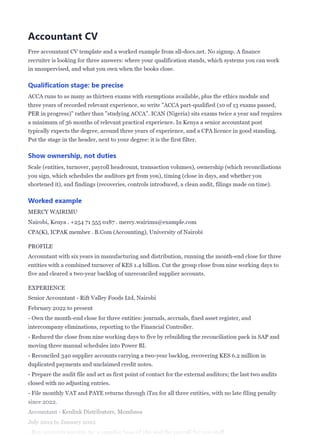 Accountant CV Example: Template, Skills, and WordingFree .docx
An accountant CV that shows qualification stage, systems, and what you own in the close cycle. Full example, part-qualified wording, and a free .docx.
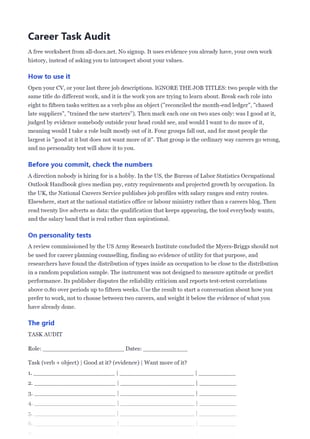 Determine Your Ideal Career Using Evidence You Already HaveFree .docx
Determine your ideal career from your own work history rather than a quiz: the task audit, what personality tests cannot tell you, and how to test cheaply.
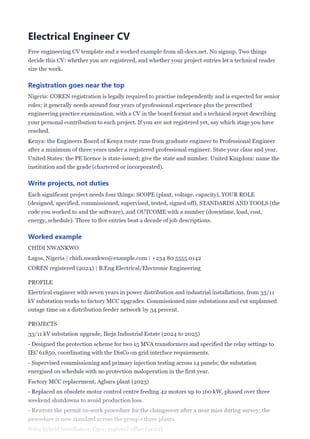 Electrical Engineer CV: Example, Template, and SkillsFree .docx
How to write an electrical engineer CV: registration status, project entries that prove competence, a full example, and a free .docx template.
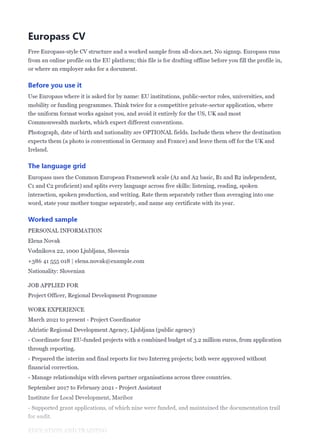 Europass CV Sample: Sections, Language Grid, TemplateFree .docx
How the Europass CV works in 2026: the profile-based builder, the CEFR language grid, when EU employers expect it, a full sample, and a free .docx.
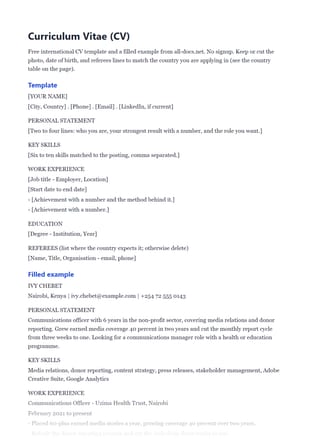 How to Write a CV: Sections, Examples, and Country RulesFree .docx
How to write a CV for the job and the country: the sections, a full example, a free .docx, and which photo, date, and referees to include by market.
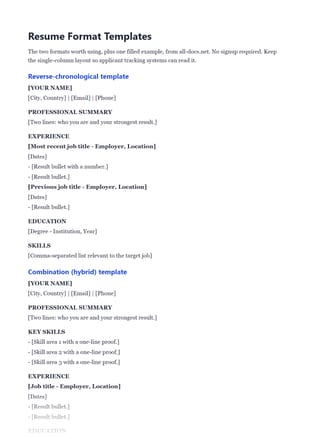 Resume Format Guide: Templates and ExamplesFree .docx
The three resume formats compared, which to use, and a free .docx of the two that pass applicant tracking systems: chronological, hybrid, functional.
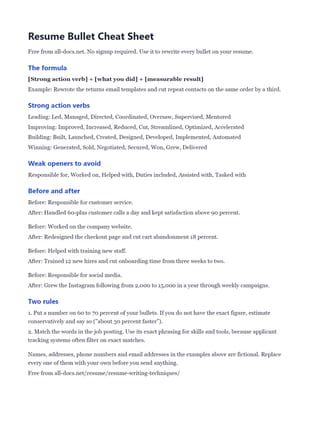 Resume Writing Tips: Bullets That Get You HiredFree .docx
Write resume bullet points that get shortlisted: the action-verb formula, quantifying, job-posting keywords, and a free cheat-sheet .docx. No signup.
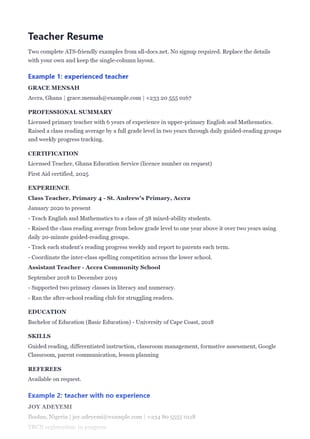 Teacher Resume Examples and Free TemplateFree .docx
Two complete teacher resume examples, experienced and no experience, plus a free .docx. ATS-ready and single-column, with US, Kenya, and Nigeria notes.
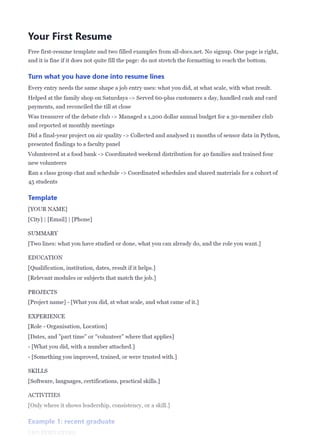 Your First Resume: No Experience? Examples + TemplateFree .docx
How to write a first resume with no work experience: what counts, how to turn it into resume lines, two full examples, and a free .docx template.


More about Resume & CV
A resume and a CV are not the same document, and the gap matters most across borders. In the US, a resume runs one or two pages and stays focused on the job you want. In the UK, Kenya, Nigeria, and much of Europe, a CV can run longer and list more history. Country rules on personal details differ hard: a photo, date of birth, and marital status are expected on a Gulf CV and inappropriate on a US or UK resume, where employers are not allowed to ask. The CV guide covers the long-form version.
Start with the resume format guide for the layout that parses cleanly, then read resume writing techniques for the phrasing that gets you shortlisted. Writing your first one? The first resume guide is built for a blank page with no jobs to list. Applying to teach? The teacher resume guide pairs with our teacher application letter so your two documents tell one story.
Recruiters remember numbers, not duties. "Responsible for customer service" tells them nothing; "Handled 60-plus calls a day and held satisfaction above 90 percent" tells them your scale and your result. Start each bullet with what you did and end it with the effect, and attach a figure wherever you honestly can: money saved, time cut, people trained, targets hit. No work numbers yet? Use results from coursework, volunteering, or a project instead.
Skip the advice that dates a resume instantly. You do not need an objective statement, a list of references, "references available on request," or your full street address. What you do need is a clean reverse-chronological work history, results with numbers, and keywords that match the job posting closely enough for the software to flag you.
Every example is free to read and copy, and rebuilt pages ship with a .docx you can edit in Word or Google Docs, no signup. Start from the file, replace the content with your own, and keep the structure that parses. The layout is the part worth copying; the words have to be yours.
Frequently asked questions
What resume format do applicant tracking systems prefer?
A single-column, reverse-chronological layout with standard section headings (Experience, Education, Skills), saved as a .docx or a text-based PDF. Avoid tables, text boxes, columns, and graphics, which parsers drop or scramble.
What is the difference between a resume and a CV?
A US resume is a one-to-two-page summary aimed at a specific job. A CV is longer and lists your full academic and professional history; it is the standard term in the UK, Ireland, and across the Commonwealth. See the CV guide.
Should I put a photo, date of birth, or marital status on my resume?
It depends on the country. US and UK employers may not ask, so leave them off. Gulf and some African and Asian employers expect them. Match the norm of the country where you are applying, not a generic template.
How long should a resume be?
One page early in your career, two once you have several relevant roles. A CV for academic or international use can run longer. Length follows relevance, not a fixed rule.