Reference Letter Templates and Examples
A reference letter vouches for someone: an employee, a student, a tenant, a person in front of a court. The letter carries weight because a named person puts their credibility behind a claim, so a vague or template-perfect letter helps no one. The guides here show you how to write one that reads as genuine, and how to ask for one when you are the person who needs it.
Guides, Templates & Examples
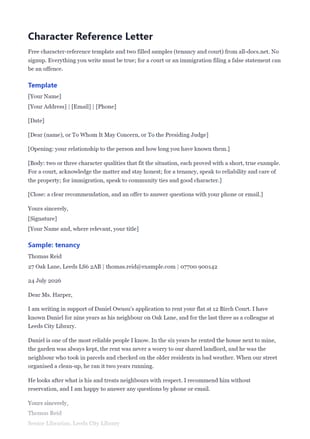 Character Reference Letter: Samples, Template + .docxFree .docx
How to write a character reference letter for court, a tenancy, or immigration: who should write it, what to include, real samples, and a free .docx.
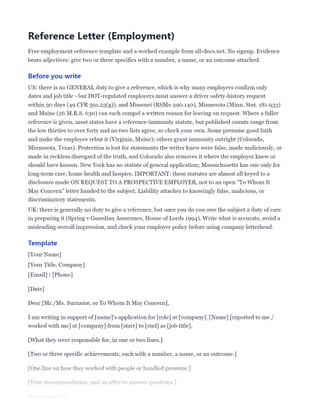 How to Write a Reference Letter (With Example + .docx)Free .docx
How to write a reference letter for a former employee: what you may safely say, a full example, how to ask for one, how to decline, and a free .docx.
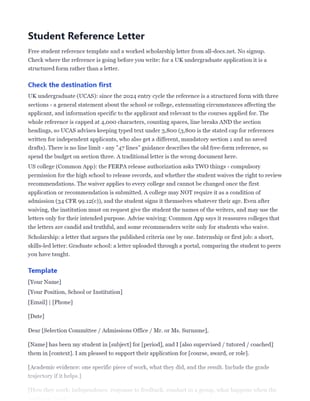 Reference Letter for a Student: Example, Template, RulesFree .docx
How to write a student reference: the UCAS structured form, the FERPA waiver, scholarship and grad-school variants, a full example, and a free .docx.


More about References
Reference and recommendation describe nearly the same document. A reference letter tends to be shorter and confirms facts (dates, role, conduct); a recommendation letter argues for a specific outcome, like admission or a job. The reference letter guide covers both and shows where the two diverge.
A character reference is its own case. Written for a court, an immigration file, a custody matter, or a tenancy application, it follows different expectations than a workplace reference, and a misjudged one can hurt. The character reference guide walks through what to include and what to leave out when the reader is a judge or a landlord rather than a hiring manager.
Students and their referees have a section of their own. A student reference letter for a scholarship reads differently than one for graduate school or a first internship, and the guide gives you an annotated example for each. If you are asking a teacher or manager to write yours, give them a short brief: the deadline, where to send it, and two or three points you would like them to mention. A referee with a briefing pack writes a better letter, faster.
Admissions officers and recruiters read hundreds of references, and they notice the ones that could describe anyone. A letter built from adjectives ("hardworking, reliable, a team player") reads as filler; a letter with one concrete story, the deadline she saved or the class he turned around, reads as true. The guides push you toward the specific, because a specific reference is both more convincing and harder to mistake for a template or an AI draft.
Every example is free to read and copy, and rebuilt pages ship with a .docx you can edit in Word or Google Docs, no signup. Adapt the wording to the real person and the real situation before it goes out. A reference is a favor with your name on it, so make it specific enough to be worth signing. If you cannot say something concrete and true, decline rather than send a letter that helps no one.
Frequently asked questions
What is the difference between a reference letter and a recommendation letter?
A reference letter confirms facts about someone: their role, dates, and conduct. A recommendation letter goes further and argues for a specific outcome, such as admission or a hire. The reference letter guide covers both.
How do I write a character reference for court?
State how you know the person and for how long, describe their character with a specific example, and acknowledge the situation honestly without arguing the case. Keep it truthful; a judge reads many of these. See the character reference guide.
How do I ask someone for a reference letter?
Ask early and in person or by a short email, and give your referee a brief: the deadline, where to send it, and two or three points you would like them to mention. Attach your resume or the posting so they have the details.
Can I write my own reference letter for someone to sign?
It happens, especially when a busy referee asks you to draft one. Write it in their voice, keep the claims to what they can honestly confirm, and let them edit and sign it. Never sign it yourself.